
Medication-free relief for treatment-resistant depression when antidepressants haven't worked
Medication-free relief for depression when other treatments haven’t worked
Why Choose TMS at NBCG?
NBCG offers NeuroStar TMS therapy®, a cutting-edge, non-invasive depression treatment that uses magnetic pulses to stimulate underactive brain regions — without medication side effects or downtime. If you've been searching for TMS therapy in Utah, NBCG offers this advanced depression treatment at multiple Northern Utah locations.

Drug-free relief for treatment-resistant depression and major depressive disorder (MDD)

FDA-cleared for Depression and OCD

No sedation or memory loss—resume daily activities immediately

Proven results — millions of TMS treatments delivered nationwide
Is TMS right for you? If you've tried two or more antidepressants without success, TMS therapy for depression may be your next step. When antidepressants don't work, TMS offers a proven, medication-free alternative.
“I feel more positive and confident than I have in years!”
-past TMS patient

How NeuroStar® TMS Treatment Works
Step 1: Recline comfortably while a small magnetic coil is positioned on your head.
Step 2: Magnetic pulses stimulate mood-related areas of the brain, helping to relieve symptoms of depression and OCD.
Step 3: Each session lasts 19-37 minutes—with no downtime.
Treatment Plan: 5 sessions per week for 4-6 weeks
Insurance Accepted: Medicare, Tricare, and most private insurers. Call to get a cost estimate.
The NBCG Difference
Unlike standalone TMS clinics, NBCG integrates TMS therapy with expert psychiatric care, medication management, therapy, and ongoing support — ensuring a truly holistic depression treatment approach. Whether you're exploring TMS for depression or TMS for OCD, our team guides you every step of the way.
Multiple TMS therapy locations across Northern Utah — Salt Lake City, Bountiful, and South Ogden

Expert providers trained in NeuroStar TMS therapy
Personalized TMS treatment plans tailored to your needs and goals
Book Your Free Consultation Today!
Skip the back-and-forth. If you’re ready to get help, you can schedule your first appointment directly with one of NBCG’s expert providers.
Not quite ready to book?
No problem—if you’d prefer to speak with someone first or have a few questions before scheduling, we’re here to help. Just fill out the form at the bottom of this page.
Proven Depression Relief That Lasts
By clinician rating, 83% of patients responded to an acute course of NeuroStar, and achieved remission from major depressive disorder. On a patient-rated scale, 69% of patients achieved response, and 36% achieved remission. (Source: neurostar.com/hcp/results/)
The only TMS treatment with demonstrated durability in depression through 1 year. In a naturalistic clinical study of 257 patients who did not benefit from antidepressant medications, NeuroStar Advanced Therapy offered durable effectiveness following acute treatment — making it a leading choice for treatment-resistant depression in Utah. (Source: neurostar.com/hcp/results/)
For veterans looking for new paths forward with depression, TMS therapy may be an option worth exploring. TMS for depression is covered by Tricare and is a proven, non-drug option for veterans dealing with treatment-resistant depression or major depressive disorder. Our blog below takes a closer look at TMS for veterans and answers common questions.
We Accept Most Insurance
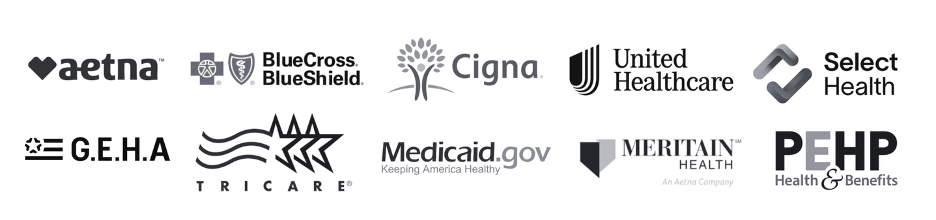
Our NBCG team goes above and beyond to verify your insurance benefits, investigate TMS therapy coverage, and complete prior authorizations — so you'll know your costs upfront and can begin TMS treatment in Utah with confidence and affordability. Is TMS covered by insurance? In most cases, yes — we accept Medicare, Tricare, Medicaid, and most major private insurers.
Curious about how our treatments work and why they matter?
Visit our Education Center to stay up to date on the latest research and learn about the proven benefits and effectiveness of TMS therapy, Spravato, and the other advanced mental health services we provide.
Frequently Asked Questions
-
A vast majority of commercial and Medicare plans have recognized the effectiveness of treating depression with TMS Therapy and now cover TMS as part of their plans. See here for a full list of insurance plans that cover TMS.
-
TMS does not circulate in the blood throughout the body, so it does not have side effects like weight gain, sexual dysfunction, nausea, dry mouth, sedation, etc. The most common side effects reported during clinical trials were headache and scalp discomfort —generally mild to moderate—occurring less frequently after the first week of treatment.
-
No. TMS Therapy involves a unique method of using pulsed magnetic fields for a therapeutic benefit. The intensity of the magnetic field is similar to that of an MRI. These techniques differ radically from the popular use of low intensity, static magnetic fields. Those products deliver weak and undirected static fields that are not capable of activating brain cells. The activation and stimulation of brain cells is a key part of why TMS is so effective.
-
No — TMS and ECT are very different treatments. ECT uses electrical currents and requires general anesthesia, often causing temporary memory loss. TMS uses targeted magnetic pulses, requires no anesthesia, causes no memory loss, and has minimal side effects. Patients can go about their normal day immediately after a TMS session. TMS is generally considered a first step in advanced depression treatment before ECT would ever be considered.
-
Most patients complete between 20 and 36 TMS sessions total, typically scheduled 5 days per week over 4 to 6 weeks. The exact number of sessions recommended will depend on your individual treatment plan and how you respond to therapy. Your NBCG provider will monitor your progress throughout treatment and adjust your plan as needed to get you the best possible results.
-
TMS therapy is well-tolerated by most patients and does not carry the systemic side effects associated with antidepressant medications. The most common side effects are mild scalp discomfort or a light tapping sensation at the treatment site during sessions, and occasional headaches in the first week or two of treatment. These typically improve on their own as treatment continues. TMS does not cause memory loss, weight changes, sexual dysfunction, or sedation. There is a rare risk of seizure associated with TMS therapy (less than 0.1% per patient). Your provider will review your full medical history to ensure TMS is safe for you.
-
A typical initial course of treatment is about 19-37 minutes daily over 4-6 weeks.
-
Major depressive disorder is a condition which lasts two or more weeks and interferes with an individual’s ability to carry out daily tasks and enjoy activities that previously brought pleasure. This condition affects approximately 16 million American adults, or about 6.7 percent of the U.S. population age 18 and older.
-
The exact cause of depression is not known, but leading research in Neuroscience points to an imbalance in the brain’s neurotransmitters as the manifestation of depression. Neurotransmitters are chemical messengers that send signals between brain cells. A person’s genetic make-up and life history may also determine her or his tendency to become depressed.
-
If you are experiencing four or more of the below symptoms and suffering from a depressed mood for more than a two-week period, you may want to seek medical help.
Significant weight loss (when not dieting) or weight gain (a change of more than five percent of body weight in a month)
Significant increase or decrease in appetite
Excessive sleepiness or insomnia
Agitation and restlessness
Fatigue or loss of energy nearly every day
Feelings of worthlessness or excessive and inappropriate guilt nearly every day
Diminished ability to think, concentrate, or make decisions
Recurrent thoughts of death or suicide
-
TMS therapy works by delivering repetitive magnetic pulses to specific areas of the brain that are underactive in people with depression. A small magnetic coil is placed against the scalp, and these pulses pass painlessly through the skull to stimulate nerve cells in the prefrontal cortex — the region responsible for mood regulation. Over the course of treatment, this stimulation helps "wake up" those areas of the brain and restore more balanced activity, leading to improvement in depression symptoms.
-
Most patients describe TMS therapy as feeling like a light tapping or knocking sensation on the scalp during treatment. Some people experience mild headaches or scalp discomfort during the first few sessions as they adjust, but this typically fades after the first week. TMS is not painful for the majority of patients, and no sedation or anesthesia is needed. You can drive yourself to and from your appointments.
-
Research shows that TMS therapy results can be long-lasting. In clinical studies, patients who responded to NeuroStar TMS maintained their improvement for up to 12 months following treatment. Some patients may benefit from maintenance sessions over time. Because TMS addresses the underlying brain activity associated with depression rather than just masking symptoms, many patients experience durable, meaningful relief.
Fill Out the Form to Learn More
One of our team members will reach out to talk through your options and answer any questions.
To schedule an appointment please call (801) 797-2163
Meet the TMS Team at NBCG
Our team is made up of compassionate and dedicated professionals who are experts in their fields. We are passionate about making a positive impact on the lives of our patients and empowering families through supportive, evidence-based treatment.
TMS Therapy Locations in Northern Utah

Downtown Salt Lake Clinic
370 E, South Temple
Suite 175, Salt Lake City
Bountiful Clinic
3415 S. Medical Dr.,
Suite A100, Bountiful
South Ogden Clinic
5926 S. Fashion Pointe Dr.
Suite 120, South Ogden
NBCG's TMS therapy in Utah uses the NeuroStar Advanced Therapy System, the most clinically studied TMS treatment available.
Adult Indications for Use
The NeuroStar Advanced Therapy System is indicated for the treatment of depressive episodes and for decreasing anxiety symptoms for those who may exhibit comorbid anxiety symptoms in adult patients suffering from Major Depressive Disorder (MDD) and who failed to achieve satisfactory improvement from previous antidepressant medication treatment in the current episode.
The NeuroStar Advanced Therapy System is intended to be used as an adjunct for the treatment of adult patients suffering from Obsessive Compulsive Disorder (OCD).
Important Safety Information
NeuroStar Advanced Therapy is only available by prescription. A doctor can help decide if NeuroStar Advanced Therapy is right for you. Patients’ results may vary.
The most common side effect is pain or discomfort at or near the treatment site. These events are transient; they occur during the TMS treatment course and do not occur for most patients after the first week of treatment. There is a rare risk of seizure associated with the use of TMS therapy (<0.1% per patient).
Visit neurostar.com for full safety and prescribing information.